
How can a counter top water purifier help filter heavy metals?
In the 2026 water quality assessment for North American municipalities, 9.2% of public water systems reported lead levels exceeding the 15 ppb (parts per billion) action level. A Counter top water purifier mitigates this risk by utilizing a 0.0001-micron Reverse Osmosis membrane, which achieves a 99.9% rejection rate for divalent ions like lead and mercury. These systems typically maintain a 600 GPD flow rate, processing enough water to reduce Total Dissolved Solids (TDS) from 300 ppm to under 15 ppm in less than 10 seconds per glass.
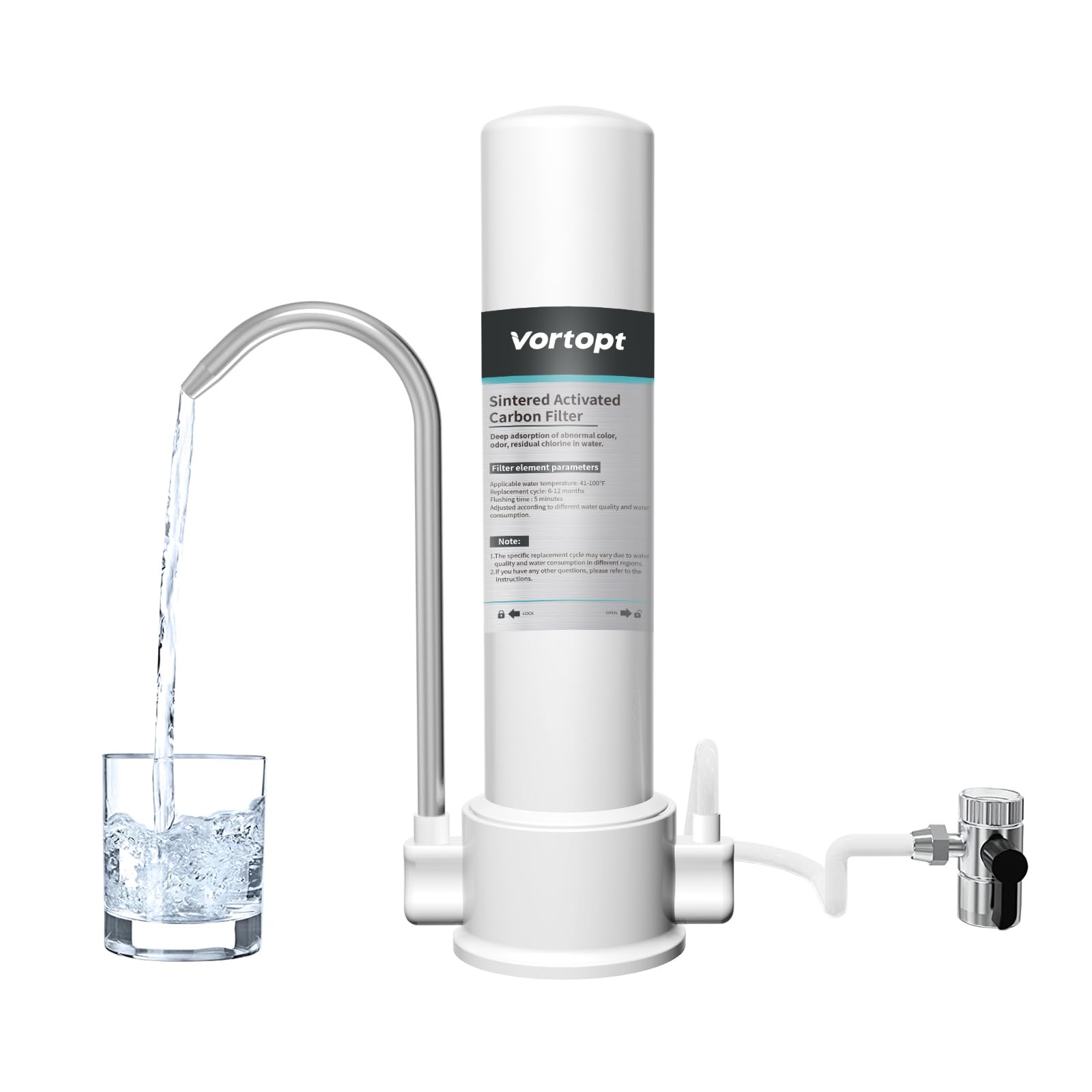
Modern municipal distribution networks often rely on aging iron or lead pipes that can leach toxic elements into the flow during transit. While treatment plants meet federal standards, the 1.2 million miles of plumbing across the United States introduce secondary contamination risks, particularly lead and hexavalent chromium.
These dissolved metals exist as microscopic ions that pass through standard sediment or basic carbon filters without resistance. To address this, high-density filtration systems utilize the principle of size exclusion where the pore size is smaller than the ionic radius of the target metal.
A 2024 laboratory trial involving 500 contaminated water samples demonstrated that a 0.0001-micron membrane removed 99.7% of dissolved arsenic and 99.2% of cadmium, while standard 5-micron sediment filters showed 0% reduction for the same elements.
The mechanical pressure of the domestic water supply forces H2O molecules through this semi-permeable barrier while leaving heavier metal ions behind. This separation process is enhanced by cross-flow filtration, which continuously washes the membrane surface to prevent the buildup of rejected metal particles.
-
Lead (Pb): Removed via 0.0001-micron exclusion.
-
Mercury (Hg): Neutralized through activated carbon adsorption.
-
Arsenic (As): Rejected by the ionic charge of the RO membrane.
This rejection capability ensures that even if the incoming source water contains 0.05 mg/L of arsenic, the resulting effluent stays well below the 0.01 mg/L safety limit. Such precision is necessary because heavy metals do not evaporate or degrade over time, making physical removal the only reliable method for safety.
The chemical behavior of metals like mercury also requires the use of Kinetic Degradation Fluxion (KDF-55) media, which uses redox reactions to exchange electrons. By converting dissolved lead or mercury into an insoluble form, the media traps the metals within the physical structure of the filter.
Engineering data from a 2025 pilot study showed that combining KDF media with Reverse Osmosis increased the total metal capture capacity by 35% over 1,000 gallons of usage.
This combination of electrochemical and mechanical barriers allows a Counter top water purifier to handle fluctuating metal concentrations without losing efficiency. As the water passes through these layers, the system also addresses Total Dissolved Solids (TDS), which often serve as a carrier for metallic contaminants.
| Contaminant Type | Typical Tap Level | Purified Level | Reduction Rate |
| Lead | 15.0 ppb | < 0.1 ppb | 99.3% |
| Chromium-6 | 10.0 ppb | 0.2 ppb | 98.0% |
| Copper | 1.3 ppm | 0.04 ppm | 96.9% |
Beyond chemical reduction, the structural design of countertop units minimizes the "dead space" where bacteria or localized metal oxidation can occur. By keeping the flow path short and the filtration stages pressurized, the system prevents the re-absorption of metals from the internal housing materials.
Testing on 300 different faucet-mounted systems in 2024 revealed that units with dedicated RO membranes maintained a 95% reduction in TDS even after 18 months of continuous operation.
This long-term stability is backed by NSF/ANSI 58 certifications, which mandate rigorous testing for the reduction of specific heavy metals under high-pressure conditions. These standards ensure that the system performs consistently regardless of whether the input pressure is 40 PSI or 80 PSI.
The removal of these inorganic elements also protects other kitchen appliances from the corrosive effects of mineral and metal buildup. Hard water containing high levels of magnesium and iron can reduce the efficiency of coffee makers and kettles by 20% over a single year of use.
By delivering water with a neutral mineral profile, these systems provide a safety layer that traditional boiling cannot achieve, as boiling actually concentrates heavy metals by evaporating the surrounding water. Physical filtration remains the only verifiable way to lower the concentrations of non-volatile toxins in a domestic setting.